Fake Banner
The Strange Case Of The Monotonous Running Average

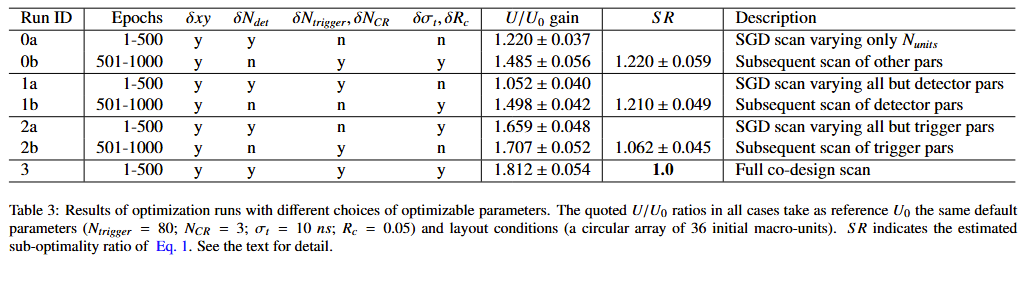
These days I am putting the finishing touches on a hybrid algorithm that optimizes a system (a...

Turning 60

Strange how time goes by. And strange I would say that, since I know time does not flow, it is...

On The Illusion Of Time And The Strange Economy Of Existence

I recently listened again to Richard Feynman explaining why the flowing of time is probably an...

RIP - Hans Jensen

Today I was saddened to hear of the passing of Hans Jensen, a physicist and former colleague in...

User picture.
picture for Hank Campbellpicture for Patrick Lockerbypicture for Heidi Hendersonpicture for Bente Lilja Byepicture for Sascha Vongehrpicture for Johannes Koelman
Tommaso DorigoRSS Feed of this column.

Tommaso Dorigo is an experimental particle physicist, who works for the INFN at the University of Padova, and collaborates with the CMS and the SWGO experiments. He is the president of the Read More »

Blogroll
Just a short post to remind anybody who has successfully completed a master in scientific disciplines that there is a chance to do research with the CMS experiment at CERN, earning a PhD in Physics or Statistics and becoming expert with Statistical Learning techniques, while being paid a salary much higher than mine.
This morning I received a copy of the book "WHAT NEXT ? White Paper of CSN1", a publication of the Italian INFN (National Institute for Nuclear Physics) addressing the question of what awaits us after the Higgs discovery, and what projects should be supported in the long-term future of HEP.
The book is the result of one year of work by many colleagues who have actively participated in four working groups and one task force, producing some preliminary studies of the discovery potential of this or that machine, and of the most important questions that need to be answered -and the projects that appear more suited to answer them. Editors of the work are Franco Bedeschi, Roberto Tenchini, and John Walsh.

The working groups were thus titled:
The title of this post is also the title of a self-published book by George Triantaphyllou, a greek physicist whom I met two weeks ago in Kolimbari, when we attended the ICNFP 2015 conference. I had met George at the same conference three years before, and this year we had some time to chat during a nice excursion in a botanical garden near Chania and at the conference dinner. As he was kind enough to offer me a copy of his book, I thought I would relate about it here today.
The first really exciting thing from Run 2 at the CERN Large Hadron Collider (at least for me) has finally appeared. A 2.9 TeV dielectron event was recorded by CMS on August 22. At this mass a new Z' boson is not excluded by Run 1 searches.... And in the whole Run 1 data the highest-mass dielectron event collected by CMS was only 1.8 TeV. So by raising the centre-of-mass energy by 60% we collect a 60%-higher-mass event, but with 0.5% of the collisions. It is nice to think that the event might really be the first hint of a new resonance !
Images of the systematic destruction of archaeological sites and art pieces in Syria are no news any more, but I was especially saddened to see before/after aerial pictures of Palmyra's site today, which demonstrate how the beautiful temple of Bel has been completely destroyed by explosives. A picture of the temple is shown below.

The fourth edition of the International Conference on New Frontiers in Physics has ended yesterday evening, and it is time for a summary. However, this year I must say that I am not in a good position to give an overview of the most interesting physics discussion that have taken place here, as I was involved in the organization of events for the conference and I could only attend a relatively small fraction of the presentations.
ICNFP offers a broad view on the forefront topics of many areas of physics, with the main topics being nuclear and particle physics, yet with astrophysics and theoretical developments in quantum mechanics and related subjects also playing a major role.