Fake Banner
The Strange Case Of The Monotonous Running Average

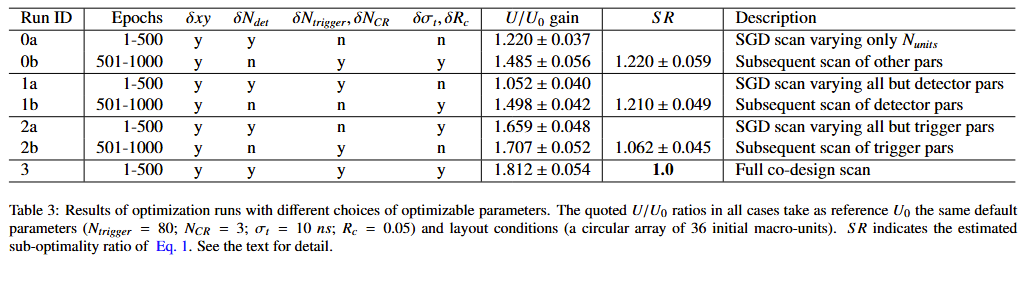
These days I am putting the finishing touches on a hybrid algorithm that optimizes a system (a...

Turning 60

Strange how time goes by. And strange I would say that, since I know time does not flow, it is...

On The Illusion Of Time And The Strange Economy Of Existence

I recently listened again to Richard Feynman explaining why the flowing of time is probably an...

RIP - Hans Jensen

Today I was saddened to hear of the passing of Hans Jensen, a physicist and former colleague in...

User picture.
picture for Hank Campbellpicture for Patrick Lockerbypicture for Heidi Hendersonpicture for Bente Lilja Byepicture for Sascha Vongehrpicture for Johannes Koelman
Tommaso DorigoRSS Feed of this column.

Tommaso Dorigo is an experimental particle physicist, who works for the INFN at the University of Padova, and collaborates with the CMS and the SWGO experiments. He is the president of the Read More »

Blogroll
I was very happy today to sign a contract with an international publisher that will publish a book I have written. The book, titled "Anomaly! - Scientific Discoveries and the Quest for the Unknown", focuses on the CDF experiment, a particle detector that operated at the Tevatron collider for 30 years. 
The Tevatron was the highest-energy collider until the turn-on of the LHC. The CDF and DZERO experiments there discovered the sixth quark, the top, and produced a large number of world-class results in particle physics. 

As I am revising the book I am writing on the history of the CDF experiment, I have bits and pieces of text that I decided to remove, but which retain some interest for some reason. Below I offer a clip which discusses the measurement of the natural width of the Z boson produced by CDF with Run 0 data in 1989. The natural width of a particle is a measurement of how undetermined is its rest mass, due to the very fast decay. The Z boson is in fact the shortest lived particle we know, and its width is of 2.5 GeV.

In a bit less than two days an orbiting object known with the peculiar name of WT1190F - but I'd like to rename it as WTF 1190 for obvious reasons - is expected to fall on Earth. The object was discovered by the Catalina Sky Survey in 2013 and little is known about its origin. It has a low density and makes a very eccentric revolution around us every three weeks. 
Below is a picture taken by the University of Hawaii 2.2 meter telescope in October. The object is observed as a bright spot that shows a relative motion with respect to fixed stars.


Top quarks, the heaviest known elementary particles, were discovered in 1995 by the CDF and DZERO collaborations, when the two Fermilab experiments spotted the decay of  top-antitop pairs produced by strong interactions in the proton-antiproton collisions provided by the Tevatron collider at 1.8 TeV center-of-mass energy. 
This week I am in Warsaw, where I attend the XI workshop on particle correlations and femtoscopy. I am actually here to give a seminar on statistical methods in particle physics next Thursday, but of course I am also going to try and deepen my understanding of the field of investigations of heavy ion collisions.

Jan Pluta, one of the old-schoolers of the field, gave an introductory talk this morning. It was titled "A brief history of femtoscopy and particle correlations - a personal view". I am reporting below some impressions from his presentation.

What is femtoscopy ? Jan started by warning that he would indeed only give a personal view of the history of the field, and that the view of others may be very different.
Recurrently, uninformed journalists re-discover the h-index and decide to create their own list of the "top scientists" in their country. The most zealous also draw some summary statistics from the list, and then venture to speculate wildly about it. Alas, it's a pattern I've seen a few times now.

The latest is an article which somebody posted on my Facebook column. It is uninteresting to see what conclusions are drawn from the graphs and lists published there, as the data are quite incomplete - in the h-index-ordered list of Italian researchers I do not appear, for one, but similarly do not dozens of top scientists who have even higher h-indices.