Yesterday and today I have been spending time in Rome together with 600 Italian colleagues, at a symposium named "What Next". The idea is to discuss what should be the strategy of the institute to participate and support basic research in fundamental physics in the next few decades.
The format of the event is of short summary talks by ten "working groups" that examined different macro-areas: Precision SM Physics, Cosmic Ray Physics, Neutrino Physics, Flavour Physics, Gravitational Waves, Beyond the SM Physics, New Technologies, Fundamental Physics, and Dark Matter (I might have forgotten one). To each summary, delivered by two or three leaders of each working group, follows an open discussion that is allotted at least as much time as the presentations.
I believe that the recent discovery of gravitational waves has been described in enough detail by reporters and bloggers around, that my own contribution here would be pointless. Of course I am informed of the facts and reasonably knowledgeable about the topic, and my field of research is not too distant from the one that produced the discovery, so I could in principle offer something different from what you can find by just googling around. But I have a better idea.
What I think you cannot read elsewhere are the free thoughts I had as I listened to the announcement by the VIRGO collaboration. So maybe this may be a different kind of contribution, and of some interest to you.
After the ATLAS and CMS collaboration disclosed their first Run 2 results on diphoton searches, less than two months ago, the realization that it would be impossible to keep up-to-date with all the theoretical ideas that were being put forth was immediate. The flood of papers discussing the 750 GeV bump was - and still is - too much to handle if reading papers is not your primary occupation.This is unfortunate, as many of my colleagues believe that the new tentative signal is real.
With a long delay, last week I was finally able to have a look at the book "From the Great Wall to the Great Collider - China and the Quest to Uncover the Inner Workings of the Universe", by Steve Nadis and Shing-Tung Yau. And I would like to report about my impressions here.
The following text, a short excerpt from the book "Anomaly!", recounts the time when the top quark was about to be discovered, in 1994-95. After the "evidence" paper that CDF had published in 1994, the CDF and DZERO experiments were both running for the first prize - a discovery of the last quark.
----
Being back in blogging mood, I decided I would make a poll among the most affectionate readers of this column - those who will come here to read "blog" pieces and not only "articles which are sponsored on the relevant spots in the main web page of the Science20 site.
The idea is that I have a few topics to offer for the next few posts, and I would offer you to choose which one you are interested to read about. Of course, you could also suggest that I write about something different from my proposed topics - but I do not guarantee that I will comply, as I might feel unfit to the requested tasks. We'll see, though.
Here is a short list of a few things I can spend my time talking about in a post here.
- recent CMS results
- recent ATLAS results


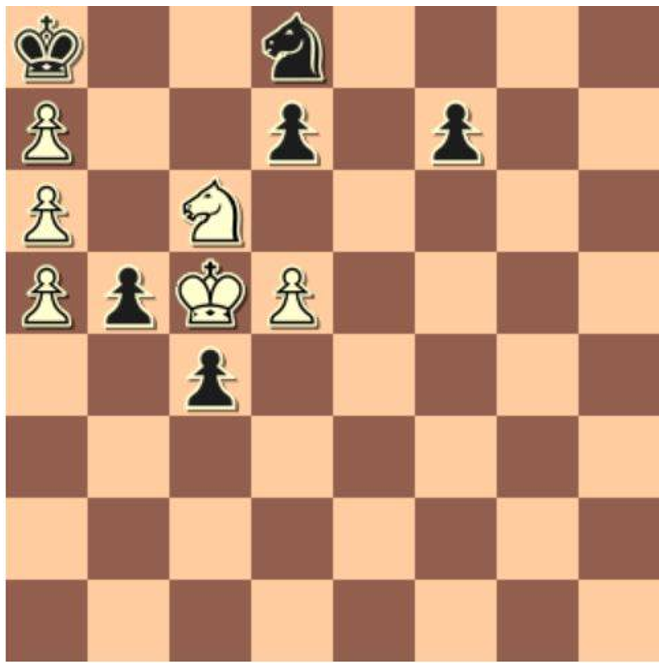 A Chess Study Requiring Backpropagation
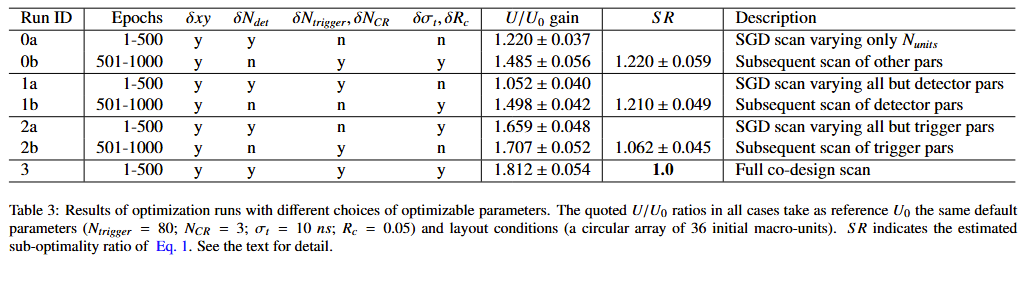 Co-Design Of Scientific Experiments
 Travel With Two Infants
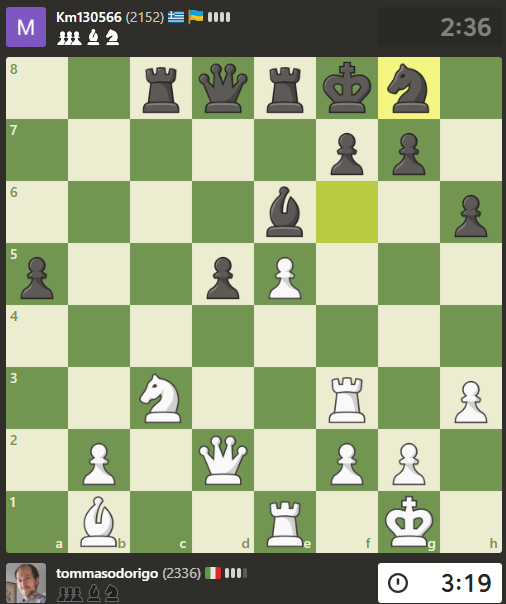 A Nice Little Combination