Being back in blogging mood, I decided I would make a poll among the most affectionate readers of this column - those who will come here to read "blog" pieces and not only "articles which are sponsored on the relevant spots in the main web page of the Science20 site.
The idea is that I have a few topics to offer for the next few posts, and I would offer you to choose which one you are interested to read about. Of course, you could also suggest that I write about something different from my proposed topics - but I do not guarantee that I will comply, as I might feel unfit to the requested tasks. We'll see, though.
Here is a short list of a few things I can spend my time talking about in a post here.
- recent CMS results
- recent ATLAS results
A Sino-Italian workshop on Applied Statistics was held today at the Department of Statistical Sciences of the University of Padova. The organizers were Alessandra Brazzale and Alessandra Salvan from the Department of Statistical Sciences, and Giorgio Picci from the "Confucius Institute".
I believe it is appropriate if I restart this column today, after a two-month period of semi-inactivity, with a description of what has been going on in my private - well, semi-private - life.
The few of you who regularly follow this blog may be rightly wondering why I have not published new posts in the last two weeks. The reason is overload. I have a few deadlines on January 31 that I need to meet, and several other errands to attend in the meantime. Hence I have decided to leave the blog behind until the end of this month.
As a follow-up of yesterday's post on the very opportune Pomeranchuk prize given to Stan Brodsky, I would like to report here on a funny anecdote Stan related to me today. The anecdote is interesting to all of us who believe the world of physics research is fully trans-national - well, it is, but there is apparently some more work to do to improve the situation further.
I was quite happy to hear today that Stan Brodsky, a professor of particle physics and astrophysics at Stanford University, has received together with Victor Fadin the 2015 Pomeranchuk Prize from the Russian Institute for Theoretical and Experimental Physics (ITEP) of Moscow. Stan is a great guy and his contributions to QCD are of wide range.


 Have A Master In Science, Want A Post-Doc Position Directly?
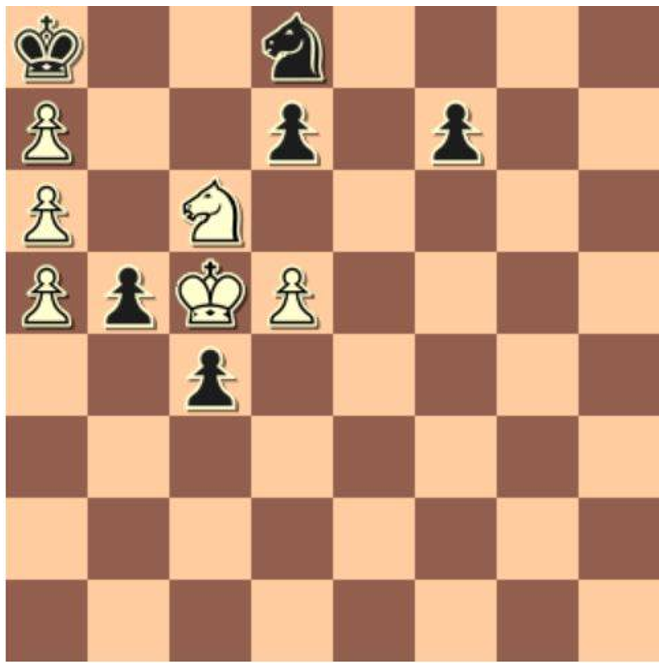 A Chess Study Requiring Backpropagation
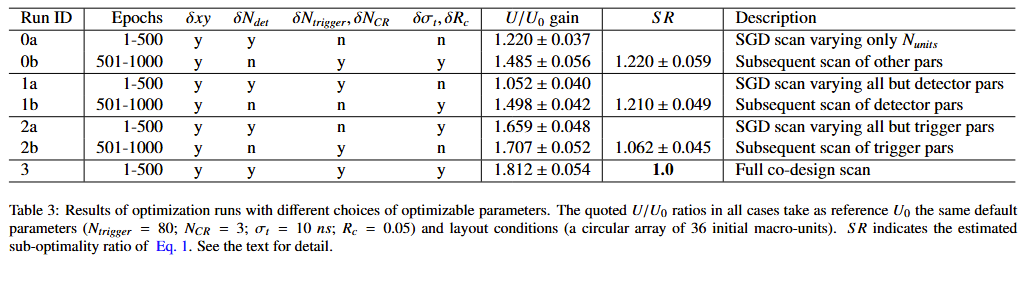 Co-Design Of Scientific Experiments
 Travel With Two Infants