Fake Banner
Travel With Two Infants

The other day I traveled with Kalliopi and our two newborns to Padova from Lulea. After six full...

A Nice Little Combination

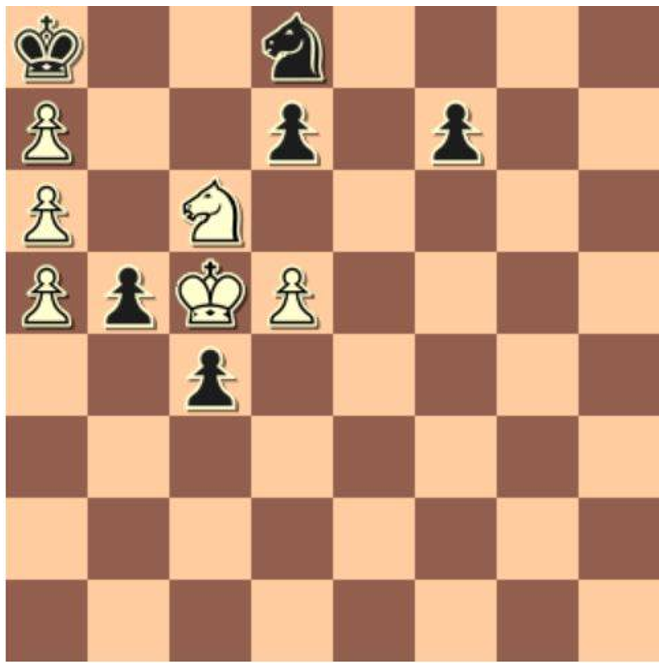
Although I have long retired from serious chess tournaments (they take too much time, a luxury...

The Strange Case Of The Monotonous Running Average

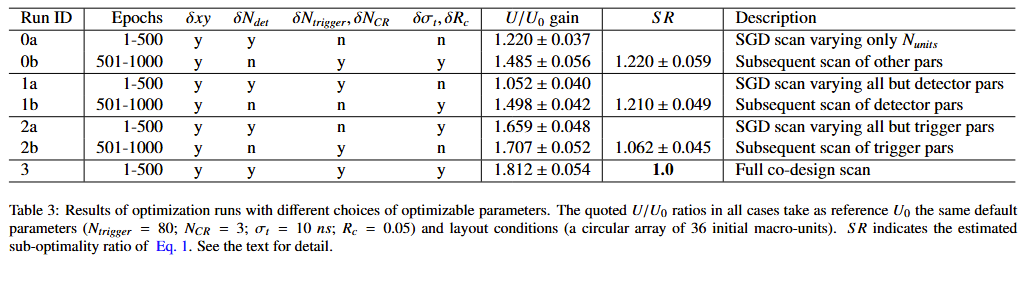
These days I am putting the finishing touches on a hybrid algorithm that optimizes a system (a...

Turning 60

Strange how time goes by. And strange I would say that, since I know time does not flow, it is...

User picture.
picture for Hank Campbellpicture for Patrick Lockerbypicture for Heidi Hendersonpicture for Bente Lilja Byepicture for Sascha Vongehrpicture for Johannes Koelman
Tommaso DorigoRSS Feed of this column.

Tommaso Dorigo is an experimental particle physicist, who works for the INFN at the University of Padova, and collaborates with the CMS and the SWGO experiments. He is the president of the Read More »

Blogroll
Please visit this site, and watch a ten seconds video which is very aggressive in its crude substance: during the time you watch it, two children die of hunger.

There are in the world today a billion human beings who have insufficient means to sustain themselves, their families, their children. This is so intolerable that we use to remove it from our brain. Can you imagine your child dying of hunger as you watch powerless ?
Today, having little inspiration to write anything original myself, I decided to have a look at what other sites held by colleagues or friends are dealing with. I offer below a few interesting links, with minimal commentary.

  • Peter Woit is always more informed than anybody else, with more precise data available earlier than anywhere else, on the status of the LHC project. I advise you to keep an eye on his blog in the near future.
A good part of basic research in fundamental physics focuses on the definition, the prediction, and the measurement of quantities which put the current theory -the standard model- to the test in the most stringent way possible. The choice of the quantities on which to base our comparisons between theory prediction and measurement is critical: it entails understanding what may make the comparison imprecise (i.e. experimental systematics affecting the measurement) or fruitless (i.e. theoretical assumptions or a bad definition of the quantity to measure).

One clear example, which I used last week in my lessons of Subnuclear Physics to undergraduates in Padova, is the measurement of the W and Z boson cross sections at the Tevatron proton-antiproton collider.
"The yield of muon pairs decreased rapidly from 1 GeV to the kinematic limit of nearly 6 GeV with the exception of a curious shoulder near 3GeV. The measurement of muons was by range as determined by liquid and plastic scintillation counters interspersed with steel shielding. Each angular bin (there were 18) had four range bins, and for two muons this made a total of only 5000 mass bins into which to sort the data. Multiple scattering in the minimum of 10 feet of steel
made finer binning useless. Thus we could only note that "Indeed, in the mass region near 3.5 GeV, the observed spectrum may be reproduced by a composite of a resonance and a steeper continuum." This 1968-1969 experiment was repeated in 1974 by Aubert et al. (1974), with a
I am presently into the second week of my lessons of Subnuclear Physics for the 2nd year of specialization in Physics, and I have just finished a lesson discussing the current searches for the Higgs boson at the Tevatron collider. Since the course has a focus on experimental techniques, I found it useful today to give as an exercise the determination of an order-of-magnitude estimate of cross section limits that the CDF experiments can set on a 160 GeV Higgs boson, with the data so far analyzed. It is an exercise I worked out by heart during my walk to the Physics Department: this should tell you it is not of overpowering difficulty.
These days the Higgs boson search is a bit over-hyped, with the impending competition between Tevatron and LHC on the discovery of the fabled boson making headlines every time there is a new, even minor, update in the results of the CDF and D0 experiment. But the hunt is on for many other, maybe even more interesting, rare processes.