Fake Banner
Living At The Polar Circle

Since 2022, when I got invited for a keynote talk at a Deep Learning school, I have been visiting...

Conferences Good And Bad, In A Profit-Driven Society

Nowadays researchers and scholars of all ages and specialization find themselves struggling with...

USERN: 10 Years Of Non-Profit Action Supporting Science Education And Research

The 10th congress of the USERN organization was held on November 8-10 in Campinas, Brazil. Some...

Baby Steps In The Reinforcement Learning World

I am moving some baby steps in the direction of Reinforcement Learning (RL) these days. In machine...

User picture.
picture for Hank Campbellpicture for Patrick Lockerbypicture for Heidi Hendersonpicture for Bente Lilja Byepicture for Sascha Vongehrpicture for Johannes Koelman
Tommaso DorigoRSS Feed of this column.

Tommaso Dorigo is an experimental particle physicist, who works for the INFN at the University of Padova, and collaborates with the CMS and the SWGO experiments. He is the president of the Read More »

Blogroll
In this sorry age for Supersymmetry (SUSY) phenomenologists, it is quite easy to step on an aching toe while discussing the results of the Large Hadron Collider experiments, whose results have let these physicists down by excluding the presence of SUSY where most of them used to put their moneys until yesterday.
Today I read with pleasure a paper on Supersymmetry which is surprisingly well written and clear. I can only warmly advise anybody seriously interested in the phenomenology of SUSY (in particular, the version called "constrained minimal supersymmetric extension of the Standard Model", cMSSM for friends) to give it a close look.

The cMSSM is a very attractive "minimal" option to extend the Standard Model with a minimal addition of parameters (still, quite a few, as in any Supersymmetric theory). Its appeal lies in the fact that one may basically study the resulting predicted phenomenology by just investigating five crucial parameters.
The family of Upsilon resonances is among the few things that can always cheer me up and remind me about my fascination for elementary particles when I get bored about my job. The sight of their mass peaks implies that heavy quarks bind together exactly as electrons and positrons do, orbiting around one another for a brief instant of time. An impossibly brief one, and yet quite long for subnuclear standards. It is always a refreshing and inspiring sight (below, see the three lowest-lying Upsilon states as they are seen by the CDF experiment at the Fermilab Tevatron collider, in a sizable fraction of their Run II data: lovely, aren't they ?).


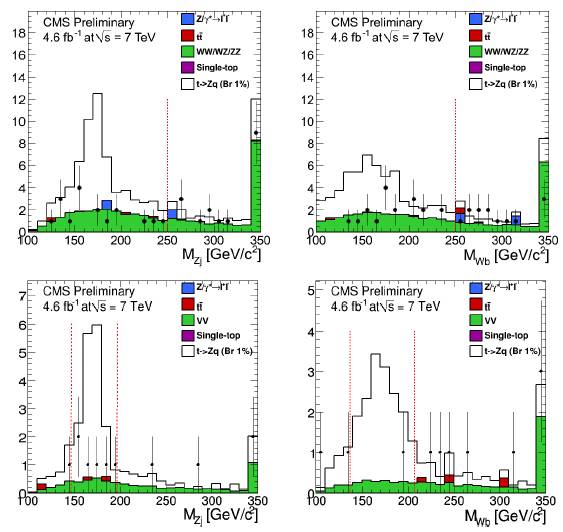
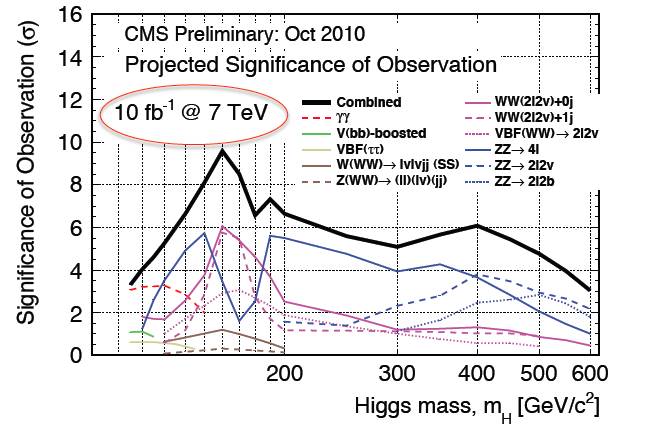
This week's graph comes from a recent publication by the CMS experiment, the one I am a proud member of together with about 3000 colleagues from all over the world.
To the couple of positions I posted yesterday from the Chess Tournament I played this weekend, let me add one I played on round II, when I was white against Fausto Scali, the blind player. The position arose from the Advance variation of the French defense (1.e4 e6 2.d4 d5 3.e5), which however we reached with a transposed move-order (1.e4 c5 2.c3 d5 3.e5). In the position below, black has just played an inaccuracy in an already slightly worse queenless middlegame:


Chess is a game, a sport, and a very radical way to test one's concentration and discipline in pure thought. Besides liking it as a game (a precondition to enjoy the other benefits), I also enjoy immensely the demands that a chess game puts on your brain's functioning; and this is brought to the extreme during a chess tournament, where you are also subject to pressure from competition factors extraneous to the 64 squares where the battles develop.